MF / 01.08
Committees & Decisions
Writing-Tablet Chairs for Adult Church Classes
Decide whether attached writing tablets can replace teaching-room tables by comparing actual study materials, seated use, movement and storage of the complete chair.
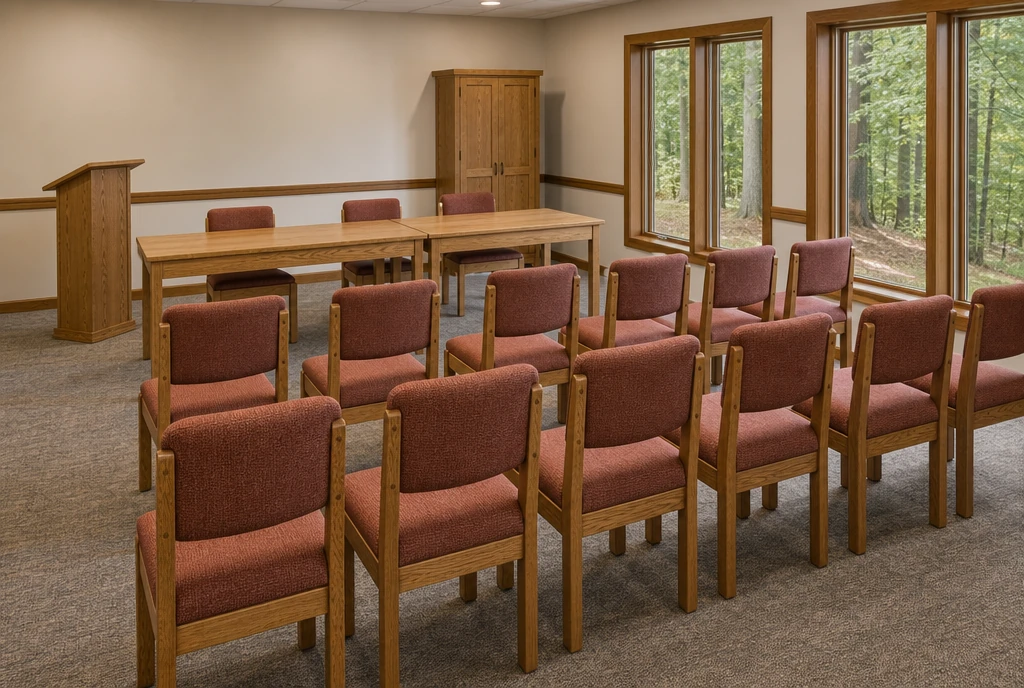
A chair with a writing tablet can remove the need for a separate table at each seat. It also ties the writing position to the chair and changes what volunteers must move when class ends. Choose it around the work people do while seated, then check whether the complete chair still fits the room's other uses.
Bring an open Bible or study book, the normal handout and a notebook to the comparison. A surface that holds the closed book may leave too little room to turn pages and write beside it. That is the purchase decision to settle before matching the upholstery to the sanctuary.
Decide which lessons need a table
Ask the class leaders to show an ordinary lesson. A short handout with occasional notes makes a different demand from an open study book, a workbook and sustained writing. Include a laptop or tablet computer only where participants actually use one, with its usual case or keyboard.
Watch what needs to stay open at the same time. If people must put the book on their lap whenever they write, the tablet has not replaced the table's job. If pairs regularly spread papers between them, keep that shared surface in the plan. Other classes may need only a place for a sheet and pen and could make good use of individual tablets.
Start with the tables and chairs the church already owns. Identify the lessons and other gatherings that still need them. A mixed room can be a sensible choice: tablet chairs for some study positions, separate tables where the work or the participant's requirements call for them. Arrange those positions as part of the group, with the room team reviewing usable access and circulation.
Compare the chair with the tablet fitted
Request the exact chair configuration rather than borrowing the dimensions of its armless version. The writing surface, support and operating movement can change the space the chair uses.
For example, KI's Doni Styles & Materials page lists its four-leg armless chair at 22.25 inches wide and 21.5 inches deep. The four-leg version with a ChangeUp flip/fold/pivot tablet is listed at 25.75 inches wide and 28 to 32.25 inches deep, with a tablet measuring 21 by 13.5 inches. Those are dimensions for the named configurations, not a rule for all tablet chairs.
Use the proposed product's drawing to see which position each dimension describes. Ask for the usable writing surface as well as its outer dimensions, including any shaped edges or fittings that affect where a book can sit. Then put the actual materials on the sample. A rectangle on a floor plan cannot tell you whether a person has a useful place to rest a forearm while writing.
Try pages, writing and getting out of the chair
Have adult participants use the chair for the reading and writing sequence the class normally follows. Invite both left-handed and right-handed writers, along with people who have different seating or access requirements. Keep their observations specific: a handout slipped off the edge, a book blocked the writing space, or the writing position required an uncomfortable turn.
Ask the supplier to demonstrate the exact tablet mechanism and provide its instructions. Check whether the proposed version supports the left- and right-handed use you need. Do not assume that a swivelling surface, a fixed right-hand tablet and a model offered in separate left and right versions work the same way.
Try entering, sitting, moving the tablet as instructed and standing again. Place a bag or coat where it would ordinarily go during class and check that it does not interfere with that sequence or the room's routes. Include a change from forward-facing teaching to group discussion if the class uses both. Follow the product's intended operation; the trial should reveal a usable arrangement without forcing a mechanism or treating the tablet as a support for standing.
Where a tablet chair does not serve a participant, retain a suitable alternative and review it with that person. One successful trial does not settle the needs of the whole group.
Confirm where the complete chairs go afterward
Tablet chairs need a storage plan of their own. KI's Doni product page explicitly says that chairs with tablet arms do not stack, even though other Doni configurations have stated stack limits. Folding a writing surface away therefore does not establish that the chair can be added to a stack.
Ask the offered chair's manufacturer about permitted storage, any compatible cart and the position of the tablet during movement. If a model nests rather than stacks, obtain the dimensions of the actual stored group. Count the complete chairs that must leave the teaching room and check their destination with the surfaces in the instructed position.
Have the setup team follow the proposed reset, including collecting books, operating the tablets, moving the chairs and returning them for the next class. Look for a place to hold chairs temporarily while doors open or another group clears the room. A chair that avoids table setup can still take more storage space than the church has available.
Request the configuration that passed the comparison
Keep a short decision note with the class materials, the proposed tablet and chair dimensions, the handed-use requirements, any separate-table positions and the agreed storage method. Record the model and options actually tried. If the offered chair changes, review the affected parts of that decision before ordering.
Use the church-chair inquiry to describe the adult teaching room, approximate quantity, delivery location and timing. Include the attached writing-surface request and ask whether a suitable configuration can be offered. The supplier needs to confirm that option and its specifications; a general custom-chair inquiry does not establish availability of the example model.
Choose tablet chairs where people can complete the lesson and volunteers can reset the room. Keep separate tables wherever they still do useful work. The finished order should support the class you hold, including the people and materials that a chair-only plan would otherwise leave out.