Use the free planning worksheet
Download the editable CSV worksheet above and open it in your spreadsheet application. It contains blank project rows with the fields used in this resource. Fill in confirmed information, leave unresolved decisions marked for review, and keep the completed worksheet with your project brief. The examples below explain the checks to make before you request pricing.
Map the activities before choosing the furniture
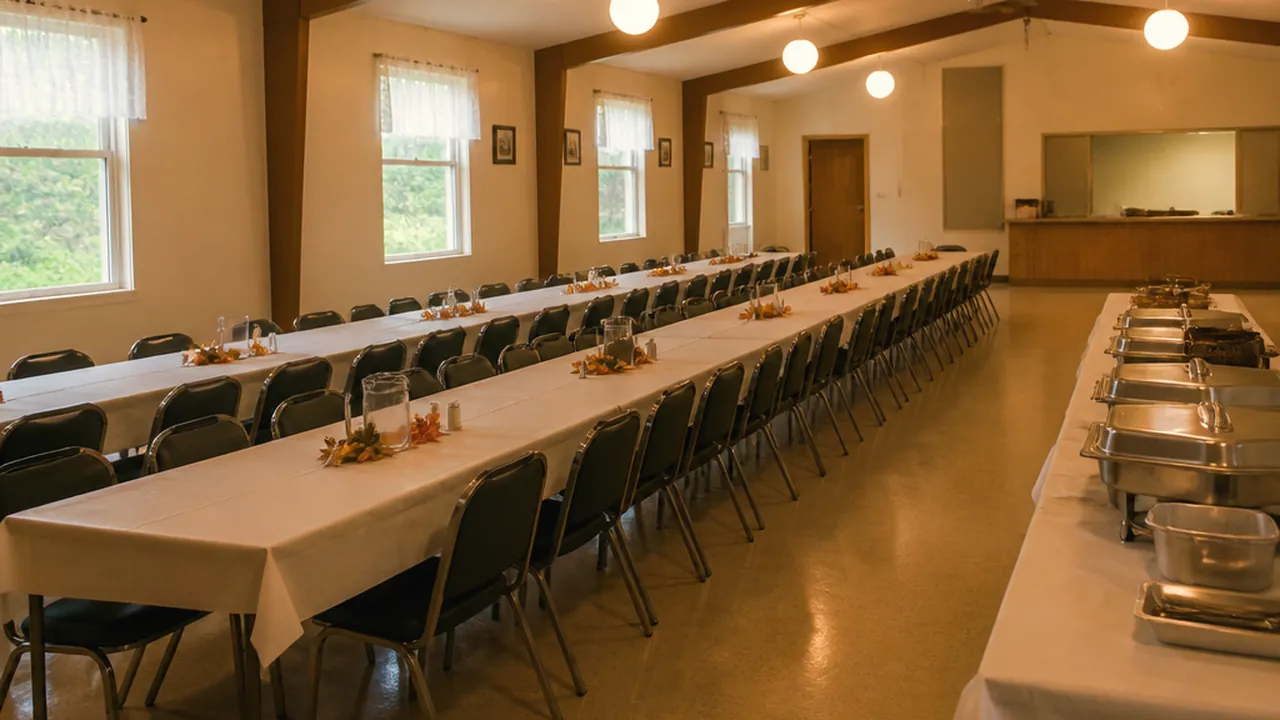
A fellowship hall may be a dining room on Sunday and an open activity space by Monday evening. Write down the most frequent setups and which events overlap. Include serving stations and registration areas as their own functions. This prevents a dining-only order from leaving the team short of support tables.
| Activity | Furniture requirement to evaluate | Setup question |
|---|---|---|
| Community meals | Dining tables, compatible chairs and separate serving tables | Where will queues and cleared dishes go? |
| Classes and workshops | Writing surfaces, chair fit and usable leg space | Does the layout work with teaching materials? |
| Receptions and coffee | Refreshment tables and a mix of sitting and gathering space | What can remain set while the room changes? |
| Activities needing an open floor | Furniture that can be moved and stored as specified | Can the available team clear the room and retrieve everything? |
A room changing purpose needs a new furniture brief. Compare the Iowa former-worship-room plan with the Louisiana meals-and-receptions plan to see how the activity changes the table and chair combination.
Choose tables and chairs together
Test a chair at the proposed table with a place setting or the materials used in a class. Compare seat height, arms, apron and leg positions. “Standard height” labels do not prove that two products work comfortably together. For a shared room, choose finishes with documented care instructions suited to the church's cleaning routine.
Check the intended environment on the exact product. For example, Lifetime identifies its commercial four-foot folding table for indoor and outdoor use. That is a model-specific statement, not a reason to assume every folding table tolerates the same conditions. Request equivalent information for each table you are considering.
Start with the tables you will retain. The Missouri table-inventory example works from that list, while the Minnesota fellowship-room plan connects retained tables with the chairs needed in rooms used at the same time.
Build an activity-based quantity list
Worked example: a church trials a meal arrangement with 12 tables and six chairs at each, producing a requirement for 72 dining chairs. It needs three separate buffet tables during that meal. A concurrent class needs two more tables and 12 chairs. The combined requirement is 17 tables and 84 chairs, before any separately chosen spares.
If six suitable tables and 24 chairs can be retained and are available for those activities, the purchase becomes 11 tables and 60 chairs. Record the dining, buffet and class table types separately; the arithmetic does not imply all 17 are interchangeable. This is an inventory example based on a chosen arrangement, not a recommended table occupancy or a capacity assessment for your hall.
Keep rows and table seating visible as separate arrangements, as in the New Jersey room plan. For a chapel and fellowship hall with different needs, the Tennessee chair brief keeps each room’s selection and table requirements identifiable.
Make changeovers manageable for volunteers
Try the complete reset: clear the tables, fold or stack furniture as instructed, load the handling equipment and move it to storage. Record where the team struggles, including heavy doors, tight corners, crowded cupboards and insufficient room beside a cart. A lightweight individual chair can still create a difficult loaded handling task.
Ask the supplier for approved stack heights, cart compatibility and loaded measurements. Mark storage positions by furniture type so the next team can retrieve what it needs. Keep serving tables accessible independently of dining tables if the hall hosts smaller weekday activities. Decide who reports damaged furniture and where a chair awaiting repair is kept out of circulation.
Prepare a practical church furniture purchasing brief
- Activities and rooms: regular meals, classes, receptions and simultaneous use.
- Inventory: tables by size and function, chairs, usable existing pieces and chosen spares.
- Samples: a table-and-chair pairing checked for comfort, cleanup and handling.
- Storage: room measurements, access route and proposed carts or dollies.
- Budget comparison: itemized furniture, accessories, delivery, unloading, assembly and taxes.
- Timing: required ready-for-use date, site access and receiving team.
- Aftercare: cleaning guidance, warranty terms and replacement parts for the exact selection.
Keep optional items visibly separate from the essential order. That helps the committee compare a complete opening requirement with a later phase without accidentally removing the carts needed to handle the initial purchase.
Get help with your fellowship hall furniture
Tell us what your fellowship hall needs. Send the church location, main activities, approximate tables and chairs, timing and current inventory. Mention a difficult storage route or a shortage of setup volunteers early; those facts help define the furniture requirement.
If the same hall also serves as your worship space, add the service arrangement to the brief. Use our church chair purchasing guide for the seating-specific questions. Keep the final layout coordinated with the people responsible for the building's access, occupancy and day-to-day operation.
Common questions
Are round or rectangular tables better for a fellowship hall?
Compare them in the activities you actually host. Test dining, class setups and storage; the most useful choice may be a defined mix rather than one shape everywhere.
Can we keep some of our existing furniture?
Yes. Count usable pieces by type and record their dimensions and condition. Subtract only inventory available when the planned activities happen.
Bring your custom chair project to us
Choose a chair type, with or without rear book racks, and share your quantity, delivery ZIP code and target date. A furniture supplier can contact you to discuss your design and the details needed for a custom quote.
Request a custom chair quote