MF / 01.02

Committees & Decisions

Pews or Chairs? The Stewardship Question Beneath the Furniture

Pews versus chairs is not a shopping decision but a discernment about tradition, flexibility, and faithfulness. How boards can hold it without dividing.

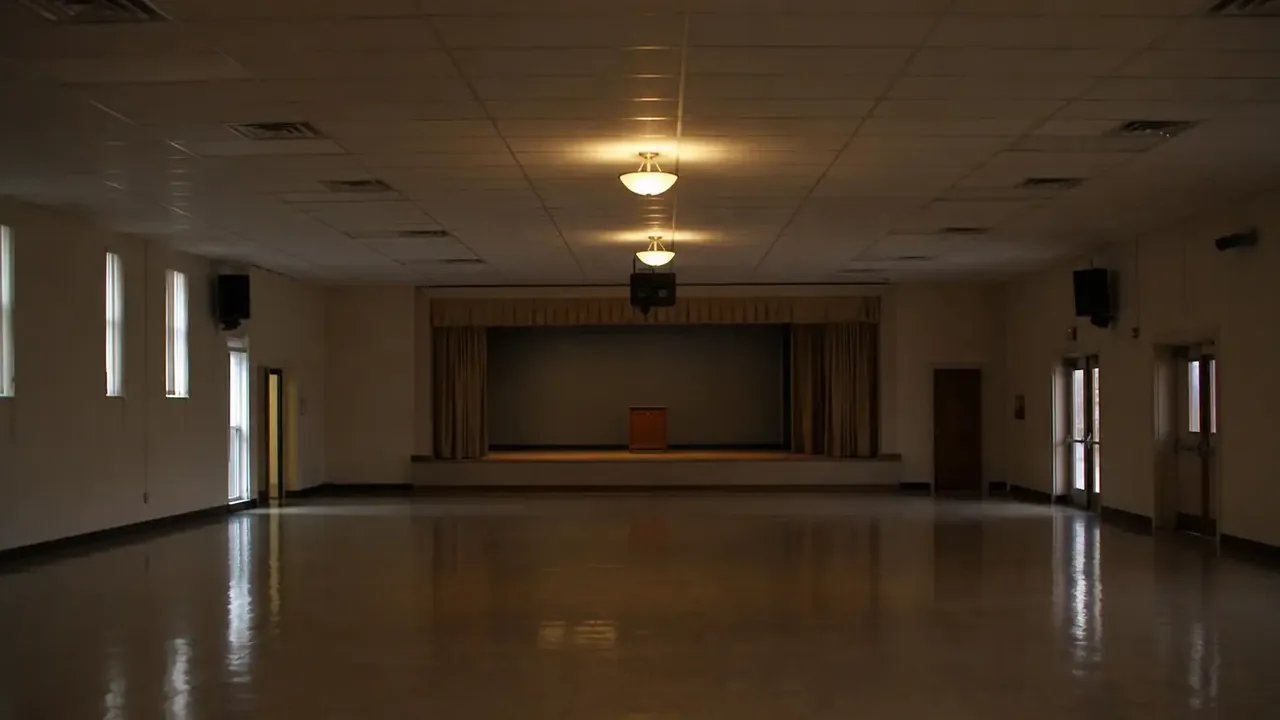
Empty sanctuary showing wooden pews and stacked chairs under one light
Empty sanctuary showing wooden pews and stacked chairs under one light.

Somewhere right now, a board is stuck on the pews question. It surfaced innocently — a renovation estimate, a request from the youth ministry, a visiting family who could not sit together — and now it sits on every agenda like a guest who will not leave. One trustee has strong feelings about tradition. Another has strong feelings about the fellowship dinner that has outgrown its hall. The meeting ends, as these meetings do, with a motion to table.

We want to offer a reframe that has helped many committees get unstuck: the pews-versus-chairs question is not a furniture decision, and it is certainly not a shopping decision. You will find no product comparisons here, no recommendations of what to buy or where. What the question actually is — underneath the catalogs someone inevitably brings to the meeting — is a stewardship discernment. It asks what your sanctuary is for, what your congregation has been given to care for, and what faithfulness to both past and future looks like in one particular room.

Framed that way, the conversation changes. Nobody has to be wrong about furniture. People only have to be honest about mission. And in our experience, congregations that start with mission end up at peace with whatever seating they choose — while congregations that start with furniture end up with new seats and old wounds.

What Pews Actually Mean

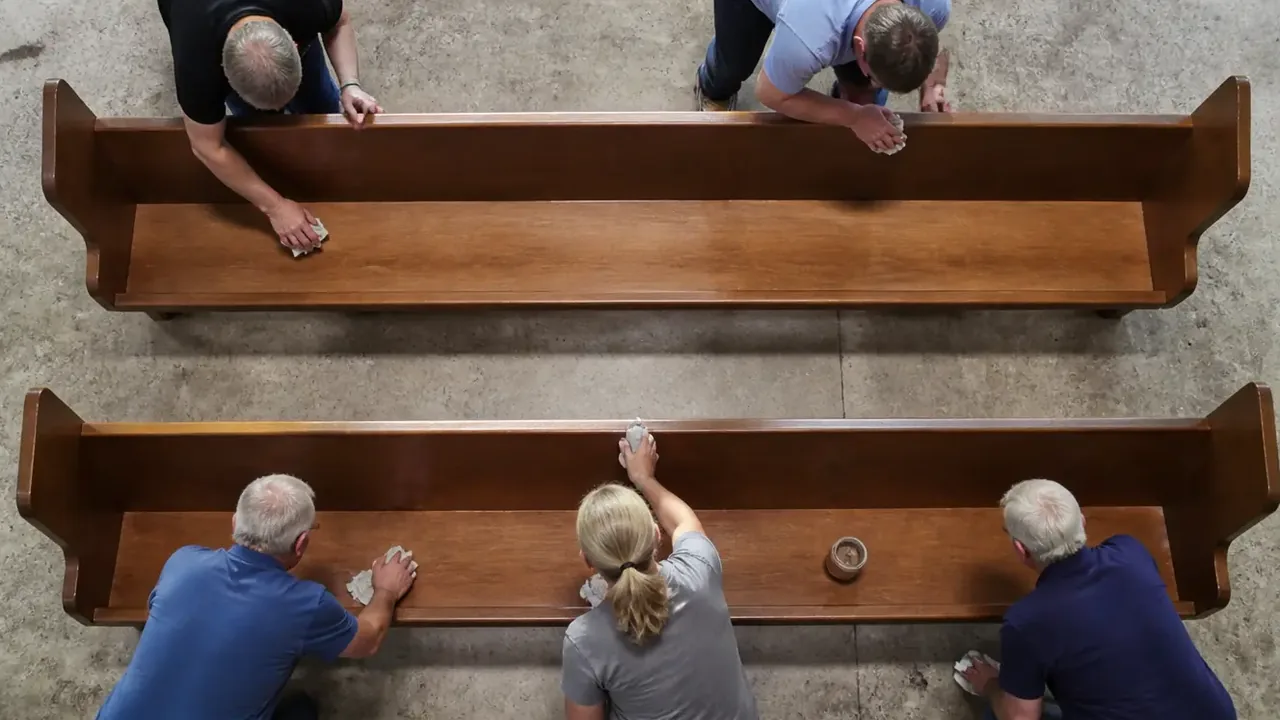
Overhead view of a row of wooden pews seen from above
Overhead view of a row of wooden pews seen from above.

Begin by taking the case for pews seriously — more seriously than its defenders sometimes articulate it themselves.

A pew is one of the few pieces of furniture in modern life that says permanence. It is fixed to the floor of a room set apart. It does not rearrange for the convenience of the moment. In many traditions, that immovability is not a bug but a quiet piece of theology: the worship of God is not one activity among others competing for the room; it is the thing the room is for. People who love their pews are rarely just nostalgic. They are responding, often without the words for it, to what fixed seating communicates — stability in a disposable culture, continuity with the saints who sat there first.

Pews also carry memory in a way chairs rarely do. The small brass plaques. The pew a family gave in a grandmother's name. The worn spot on the rail where generations of the same fidgeting children have run their fingers. The member who remembers 1974 is not being difficult when she speaks up at the congregational meeting; she is testifying that this furniture has been a witness to baptisms, weddings, and funerals, and she is asking whether the congregation still values what it witnessed.

And pews do practical work too: they seat people close together in a way that individual seats do not, they define the room's geometry, and a well-built hardwood pew can be refinished and re-cushioned across a very long life. Any honest stewardship conversation puts all of this on the table first — because a congregation that feels its heritage has been heard can think clearly about change, and one that feels steamrolled cannot.

What the Flexibility Case Actually Is

Overhead flat-lay of stacked chairs beside an empty sanctuary floor
Overhead flat-lay of stacked chairs beside an empty sanctuary floor.

Now take the other case just as seriously — and notice that it, too, is a stewardship argument, not a fashion statement.

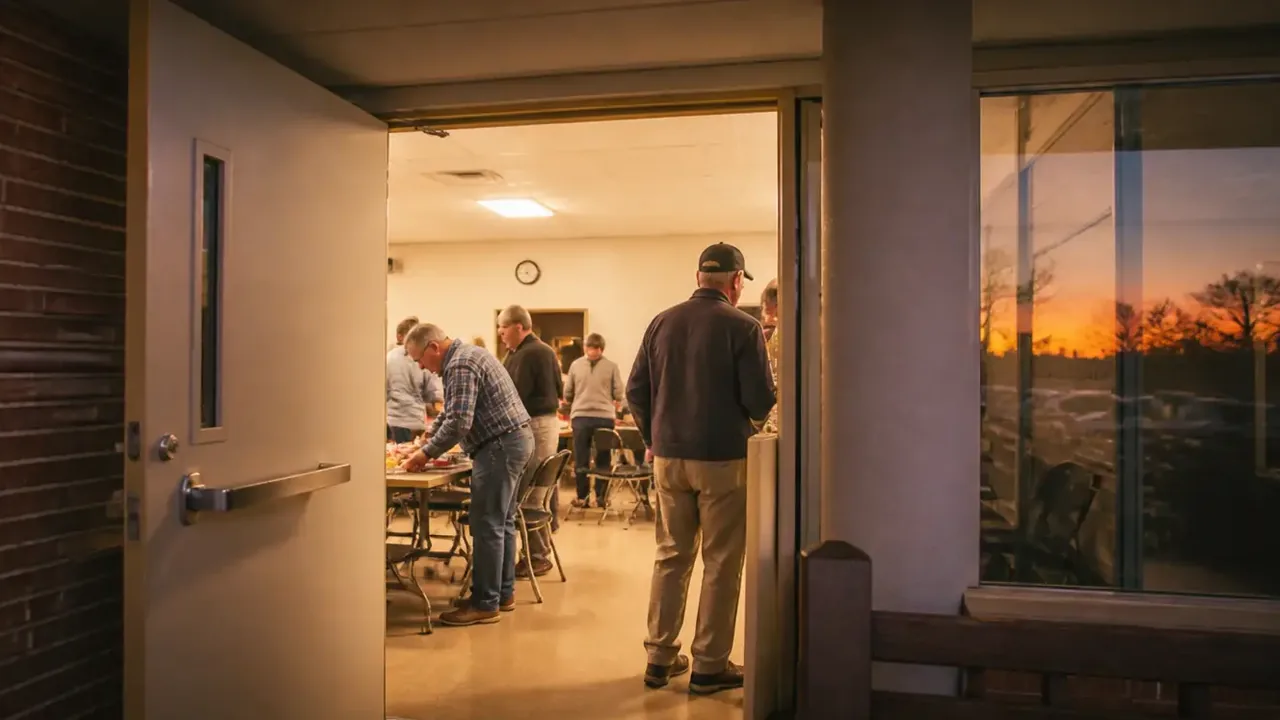
Most church buildings sit at the center of a hard arithmetic: the sanctuary is usually the largest, best-built, best-loved room in the building, and in many congregations it is used for a few hours a week. Meanwhile the midweek ministries — the community meal, the recovery group, the children's program, the concert series, the neighborhood group that asked about space — squeeze into a fellowship hall that was never sized for them. When someone on your board says "we need flexible seating," what they usually mean is "our largest room is closed to most of our ministry."

That is a serious claim on a board's attention. Stewardship of a building means stewardship of its hours, not just its fabric. A sanctuary that can be respectfully reconfigured — chairs moved for a dinner church, a concert, a conference, a funeral reception too large for the hall — is a room whose usefulness multiplies. Congregations sharing their building with a second congregation, or renting space as part of their financial sustainability, feel this pressure most keenly.

But flexibility has costs its advocates should name just as honestly. Movable seating must actually be moved — by volunteers, on a schedule, back again before Sunday — and the congregation that imagines constant reconfiguration often discovers the room settles into one arrangement anyway. Flexibility also trades away some of what pews communicate: set-apartness, permanence, the sense that this room is different from every other room in your week. Neither side of this ledger is trivial. That is precisely why it is a discernment.

The Cost Horizon: Thinking in Decades

Low angle of worn wooden pews stretching toward the altar
Low angle of worn wooden pews stretching toward the altar.

Boards are used to comparing prices. Stewardship asks them to compare horizons, and here the two options behave differently in kind, not just in amount.

Fixed hardwood seating tends to follow a restoration rhythm: long stretches of ordinary care punctuated by periodic reconditioning — refinishing, re-cushioning, tightening, occasionally repairing what an enthusiastic radiator has done to a hundred-year-old rail. The wood itself, well kept, can outlast everyone in the meeting. Movable seating tends to follow a replacement rhythm instead: it serves hard, wears in ways that are not economical to restore, and is eventually replaced in cycles measured in years and decades rather than generations. Neither rhythm is automatically cheaper across a long horizon; they distribute cost differently across time, and they distribute labor differently too — restoration is a craftsman's bill, replacement is a recurring line item.

We deliberately offer no figures here, because honest numbers can only come from your own building, your own quotes, and your own region. What a board can do without any quotes at all is decide which rhythm suits its situation: a congregation with an endowment mindset and a beloved historic room may rightly prefer the restoration rhythm; a congregation in a season of experimentation and heavy weekday use may rightly prefer the replacement rhythm and the flexibility it buys. Write the chosen rhythm into your long-term plan either way — seating that appears in no maintenance plan becomes a crisis on whatever day it fails, a theme our companion piece on maintenance as stewardship takes up at length.

The Middle Paths Nobody Puts on the First Slide

Mixed pews and chairs arranged in a sanctuary at dusk
Mixed pews and chairs arranged in a sanctuary at dusk.

The question is almost always presented as binary. It almost never has to be resolved as one. Before any vote, make sure your committee has genuinely considered the middle paths:

  • Mixed seating. Keep pews in the heart of the nave and place movable seating at the rear, the transepts, or the side aisles. The room keeps its anchor of permanence; the edges gain flexibility for wheelchairs, families, overflow, and reconfiguration. Many committees that begin at loggerheads end here, and not as a grudging compromise — mixed rooms often serve better than either pure option.
  • Keeping some pews. If a full change is chosen, retaining a few pews — the memorial rows, the back rail where the early-arrivers sit — preserves continuity and honors the givers while freeing the rest of the floor.
  • Pew restoration. Sometimes the real complaint is not "pews" but "these pews": failing finishes, punishing ergonomics, spacing set for a smaller generation. Restoration and respacing — refinishing the wood, rebuilding cushions, widening the space between rows — can resolve the actual grievances while keeping the heritage. It deserves a place in every options memo, evaluated as seriously as replacement.
  • Reconfiguration without replacement. Shortening some pews to create wheelchair positions and wider aisles, or removing a rear section to create gathering space, changes how the room works without changing what it is.

A committee that presents three or four such scenarios, each with its honest gains and losses, gives the congregation a real choice. A committee that presents "keep everything" versus "replace everything" gives it a fight.

Questions Before the Question

Here is the discipline we would urge on any board: refuse to discuss seating until you have written answers to the prior questions. Seating is downstream of mission, and a board that answers these first will find the furniture question has half-answered itself.

  1. What is this room for on Tuesday? Not aspirationally — actually. List everything that happens in the sanctuary in an ordinary month, and everything that wanted to happen there but was turned away. If the honest answer is "worship, weddings, and funerals, and we are content with that," the flexibility case weakens. If the list of turned-away ministry is long, it strengthens. Some of that pressure may belong to other rooms entirely — our guide to multi-use fellowship halls asks whether the hall, not the sanctuary, should be carrying the weekday load.
  2. How full is the room, honestly? Seating decisions made on folklore capacity numbers go wrong in both directions. Do the tape-measure work in our guide to measuring real sanctuary capacity before any option is drawn.
  3. What has been entrusted to us? Inventory the memorials, the dedicated gifts, the craftsmanship, the history. You cannot honor what you have not listed.
  4. Who is not in the room, and why? Mobility, sight lines, families with small children, the visitor who could find no seat. Seating is hospitality infrastructure.
  5. What can we care for? Every option implies a maintenance covenant — volunteer hours, storage, restoration funds. Choose a covenant your congregation can actually keep.

Holding the Conversation Without Splitting the Church

However the discernment lands, how it lands matters more than where. A few counsels from committees that have walked this road:

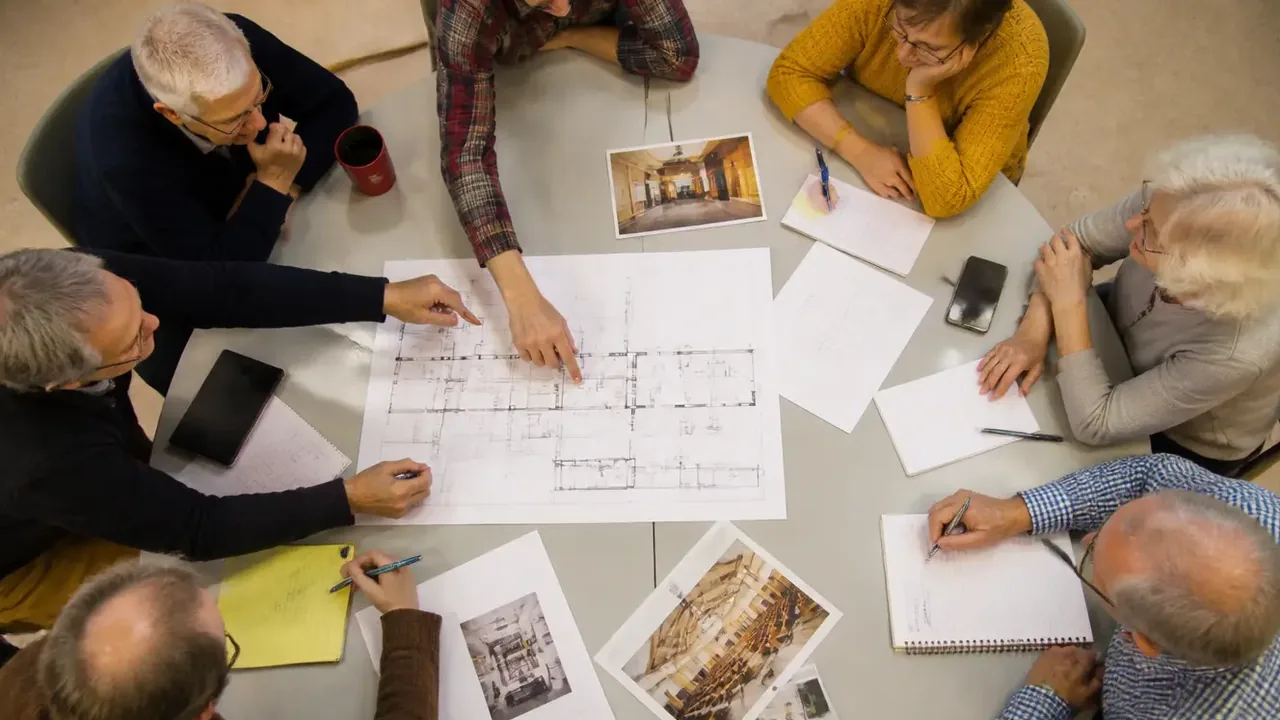
  • Separate the listening from the proposing. Gather the congregation's attachments and hopes before any option exists on paper. The full process — charter, listening sessions, options memo, trials, vote — is laid out in our guide to running a reseating committee, and we would call it required reading before your first motion.
  • Never let it become a referendum on generations. The moment the question is framed as "the old guard versus the young families," everyone has already lost. Keep the framing on mission, where a longtime member and a newcomer can find themselves unexpectedly on the same side.
  • Honor the memorials out loud and early. Contact memorial families privately before anything is public. Announce from the start that every plaque and dedicated gift will be honored in whatever outcome — keepsakes, relocation, a book of remembrance — and keep that promise conspicuously.
  • Let people sit in the future before voting on it. Trial arrangements convert fear into experience.
  • Depending on your polity, know who decides — and say so. Whether the call belongs to your session, vestry, council, board, or a congregational meeting, name the process publicly at the outset. Ambiguity about who decides breeds more conflict than the decision itself.

A Benediction for the Stuck Board

If your board is currently tabling this question for the fourth consecutive month, take heart: the delay is not dysfunction. It is your congregation telling you the question is bigger than furniture — and it is. Answer the Tuesday question. Measure the room honestly. List what you have been entrusted with. Put the middle paths on the table. Then decide, in whatever way your tradition decides, and trust that a congregation that has discerned together can live gratefully with either answer. The seats are not the point. The people in them are — the ones who filled them for a century, and the ones you are making room for next.