MF / 02.03
The Building Itself
Maintenance as Stewardship: Caring for What You Own
Deferred maintenance is borrowed money from the next generation. How your board can build a seasonal rhythm, a reserve line, and a binder that lasts.
Every congregation has a moment when the building stops being invisible. Maybe it is a stain spreading across the ceiling tiles over the choir loft. Maybe it is the boiler making a new sound in the middle of the Christmas Eve service. Maybe it is a visitor gently mentioning that the front steps feel loose. Whatever the trigger, the conversation that follows usually starts with the same uncomfortable question: how long has this been going on?
The honest answer, in most churches, is years. Not because anyone was negligent, exactly, but because maintenance is the least glamorous line in the budget and the easiest one to postpone. There is no ribbon-cutting for a serviced boiler. Nobody stands up at the annual meeting to celebrate gutters that drained properly all spring. And so, in congregation after congregation, the work quietly slips, one deferred year at a time, until the building presents an invoice nobody voted for.
We want to make the case that maintenance is not a distraction from ministry. It is ministry: a slow, unglamorous, deeply faithful kind. And we want to give your board a practical way to practice it: a seasonal rhythm, a protected reserve, and a binder that outlives every property chair who ever touches it.
The Theology of Upkeep
Most traditions, whatever their differences, share a conviction that the congregation holds its building in trust. You did not build it alone. In many cases you did not build it at all. Somebody before you sacrificed for that roof, that furnace, those windows. And somebody after you will inherit whatever condition you leave them in.
Seen that way, deferred maintenance is not savings. It is borrowing: borrowing from the next generation, without their consent, at a rate of interest that only ever goes up. A roof patched on schedule is a modest expense absorbed by the people who used the roof. A roof ignored for a decade becomes a capital campaign inflicted on people who were in grade school when the first leak appeared.
This framing matters because it changes the conversation at the board table. "Should we spend money on the building this year?" invites postponement. "Are we passing this building forward in better or worse condition than we received it?" invites honesty. Depending on your polity, the body that answers may be a session, a vestry, a council, or a board, but the question is the same in every tradition.
The Seasonal Rhythm
Buildings live on a calendar, and the congregations that care for them well tend to follow it. Two walk-arounds a year, one in spring, one in fall, form the backbone of almost every sustainable maintenance habit we have seen.
The spring walk-around asks: what did winter do to us? Look at the roofline from the ground, the gutters and downspouts, the grading around the foundation, the sidewalks and steps, the paint and trim, the places where ice and meltwater went somewhere they should not have. In much of Canada and the northern United States, freeze-thaw cycles do more quiet damage than any single storm, and spring is when the evidence is freshest.
The fall walk-around asks: are we ready for what is coming? This is the season for having the boiler or furnace professionally serviced before the first cold night, checking that gutters are clear before the leaves finish falling, confirming that snow-removal arrangements are actually arranged, and walking the building with heating season in mind.
A few items belong on the calendar but not on the volunteer clipboard. Heating systems, chimneys, and anything involving combustion deserve a qualified technician on a regular service contract. Questions about radon, water quality, or air quality, which vary enormously by region on both sides of the border, are questions for licensed professionals, and your local health authority can point you toward testing resources. The volunteer's job is to make sure the appointment gets booked, not to perform the inspection.
If your congregation has never done a structured walk-around, a good first step is running a full volunteer facilities audit: a one-time, top-to-bottom version of the same discipline that gives you a baseline to maintain from.
The Reserve Line, and Why Boards Raid It
Almost every church budget we have seen includes some version of a maintenance or capital reserve line. And almost every treasurer can tell you the story of the year it got raided.
The pattern is familiar. Giving comes in a little short. The board meets in November with a gap to close. And there, sitting quietly in the budget, is a reserve line attached to no invoice, no vendor, no deadline. Nobody is asking for it this year. The motion to reallocate passes without much discussion, everyone feels responsible rather than reckless, and the building's future quietly absorbs the present's shortfall.
The problem is not that boards are careless. It is that a reserve with no story attached is defenseless. The remedy is to give it one. Tie the reserve to named, dated realities: the roof is this many years into its expected life; the boiler was installed in a particular year; the parking lot will need attention within a known window. When the reserve line is understood as "the roof fund, currently underfunded," raiding it stops feeling like a bookkeeping adjustment and starts feeling like what it is: a decision to borrow from a known future expense.
Some congregations formalize this with a motion establishing that the reserve can only be redirected by a separate, explicit vote, never folded into general budget balancing. Whether that fits your governance is a question for your own tradition and bylaws, but the principle travels: make the future visible, and it becomes much harder to spend.
The Binder
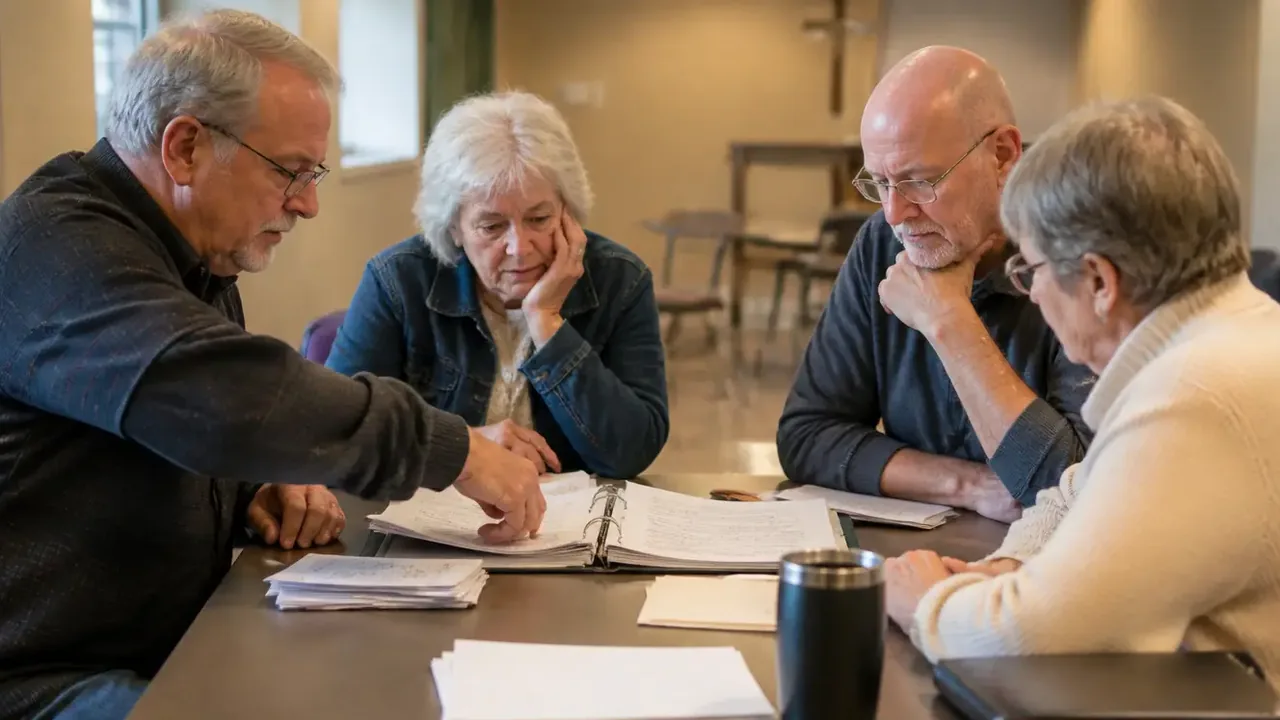
Every congregation has a version of this scene. A contractor asks when the roof was last replaced, and four longtime members give four different decades. The answer exists: it is in the minutes somewhere, or in a folder in a filing cabinet in an office that was reorganized twice since then, but for practical purposes, the knowledge is gone.
The fix is humble and transformative: a single binder (or a shared digital folder, or ideally both) that holds the building's memory. It should include:
- The age and installation date of the roof, and any repair history
- Service records for the boiler, furnace, or HVAC equipment, with the contractor's contact information
- Warranties, with their expiry dates, for anything still covered
- Paint colors and finish specifications, so touch-ups actually match
- The location of shutoffs (water, gas, electrical panels) with photos
- Contact information for the plumber, electrician, and other trades the congregation already trusts
- Copies of any inspection reports, and notes on anything the fire marshal or local authority having jurisdiction has flagged
None of this takes expertise to assemble. It takes an afternoon, a scanner, and the willingness of one or two people to go asking questions while the people who know the answers are still around to ask.
Preventive Versus Reactive
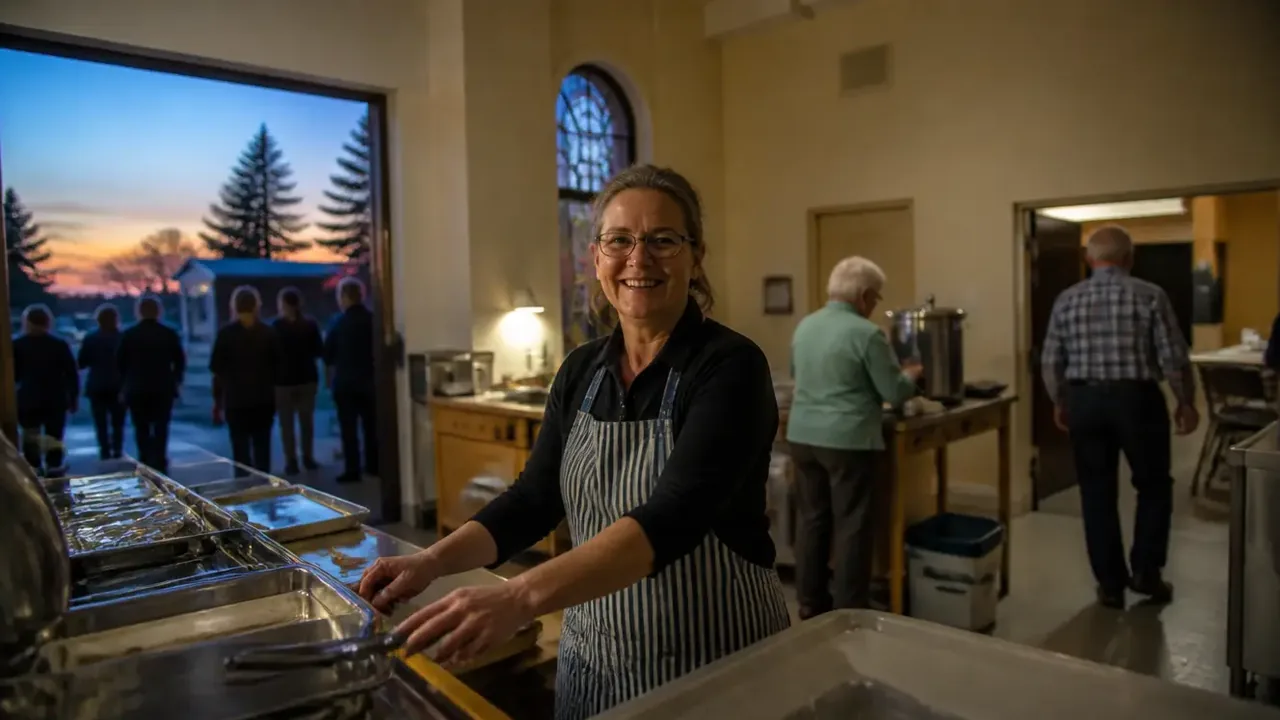
There is a temperament difference between preventive and reactive spending, and boards feel it every time they vote. Reactive spending is easy to approve because the emergency makes the decision for you: the pipe has burst, the furnace is dead, the discussion is short. Preventive spending is hard to approve because nothing is visibly wrong yet, and there is always a more urgent-feeling use for the money.
But everyone who has cared for a building for long knows how the trade works. Small, scheduled, boring expenditures (the service contract, the caulking, the flashing repair, the drainage fix) consistently prevent large, unscheduled, dramatic ones. The congregation that budgets modestly for prevention every single year almost always spends less over a generation than the congregation that waits for failures, and it suffers far less disruption to worship and ministry along the way. If your board only ever discusses the building when something is broken, that is the pattern to break first.
Energy as Stewardship
Utility costs are one of the few building expenses that respond to attention year after year. Sealing drafts, maintaining heating equipment, adjusting schedules so you are not heating an empty building all week: these are stewardship decisions as surely as any budget vote, and in most congregations they are also the gentlest place to find money for everything else.
A useful discipline is simply to track your energy use over time so you can see whether things are improving. ENERGY STAR offers resources that congregations can use to benchmark their energy use, and a volunteer with a spreadsheet and a year of utility bills can learn a surprising amount about a building. If your fellowship hall or education wing sits mostly empty between Sundays, energy is also one more reason to think about putting those spaces to fuller weekly use: a heated building that serves the community five days a week is better stewardship than one heated for two hours of use.
Workdays, Done Safely
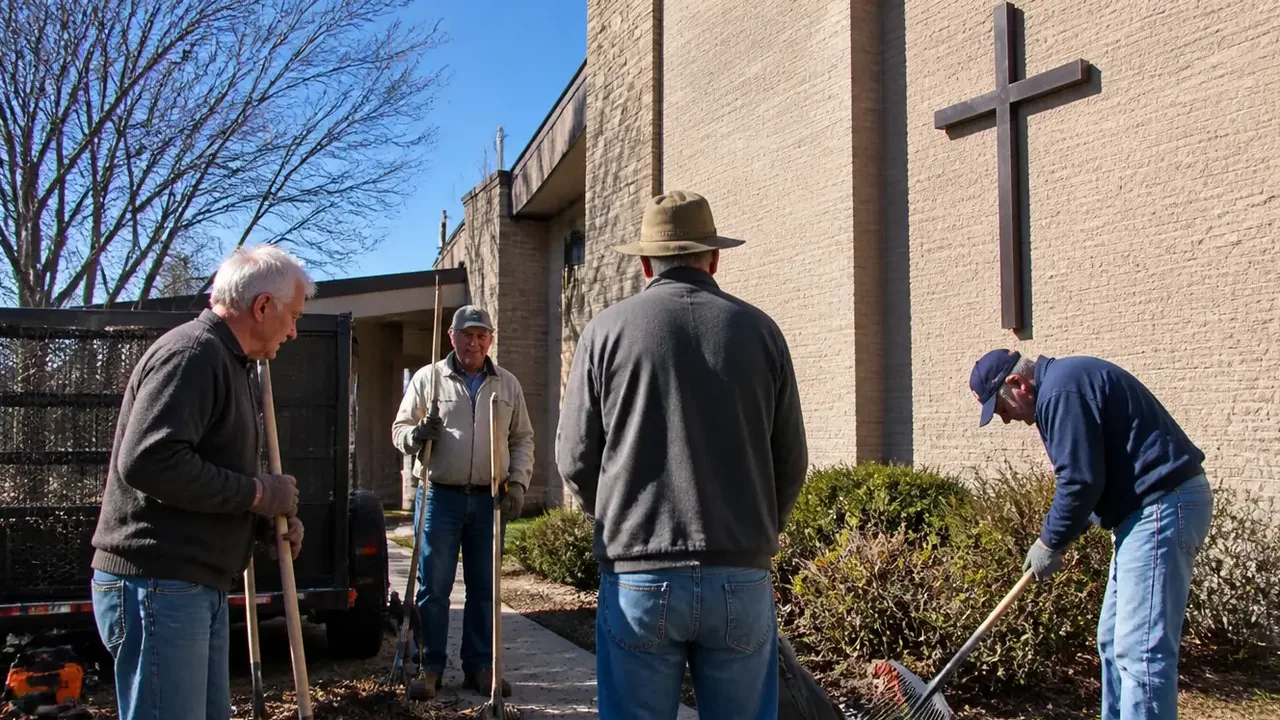
Volunteer workdays are one of the loveliest traditions in congregational life: painting, planting, cleaning, small repairs, coffee and doughnuts in the parking lot. Keep them. But keep them on the ground.
Ladders, roofs, electrical work, and anything structural are for licensed professionals, full stop. This is not fussiness; it is love for your volunteers and plain prudence about liability. Your insurer almost certainly has guidance about what volunteer labor your policy covers, and it is worth a phone call before the workday, not after an incident. A good rule of thumb many congregations adopt: if a task requires leaving the ground or opening a panel, it goes on the professional list, not the sign-up sheet.
Honoring the Quiet People
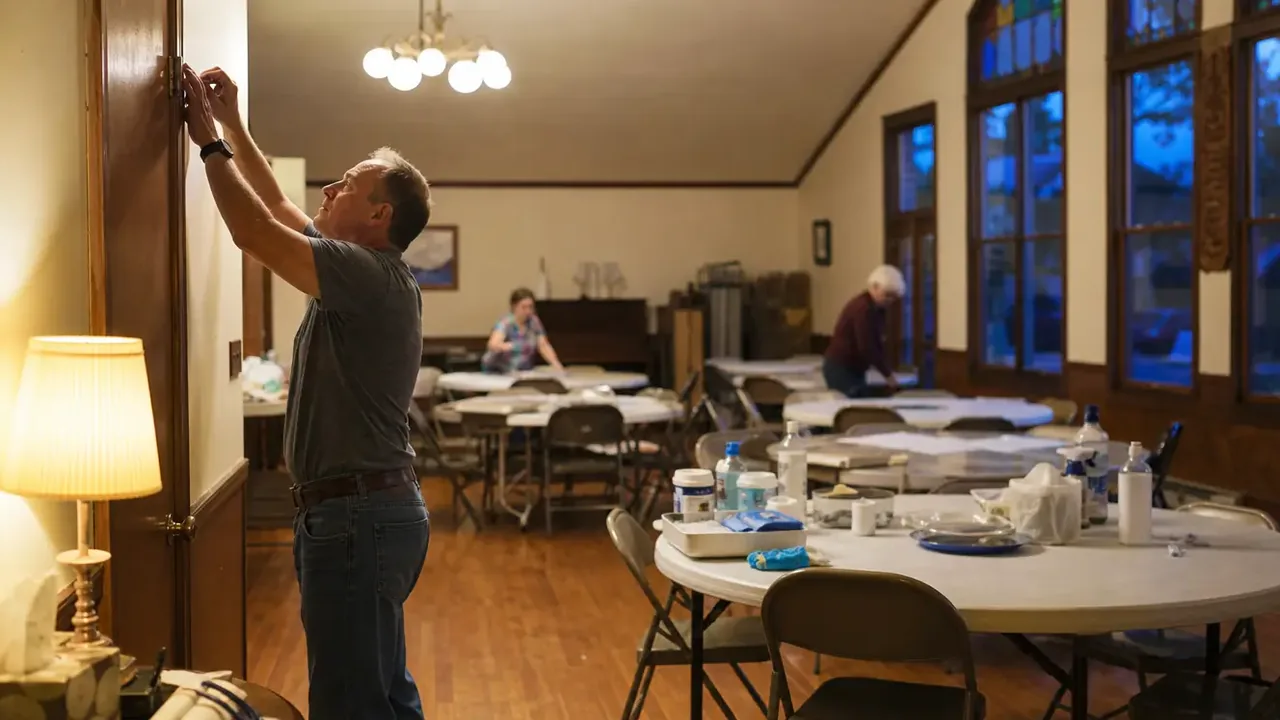
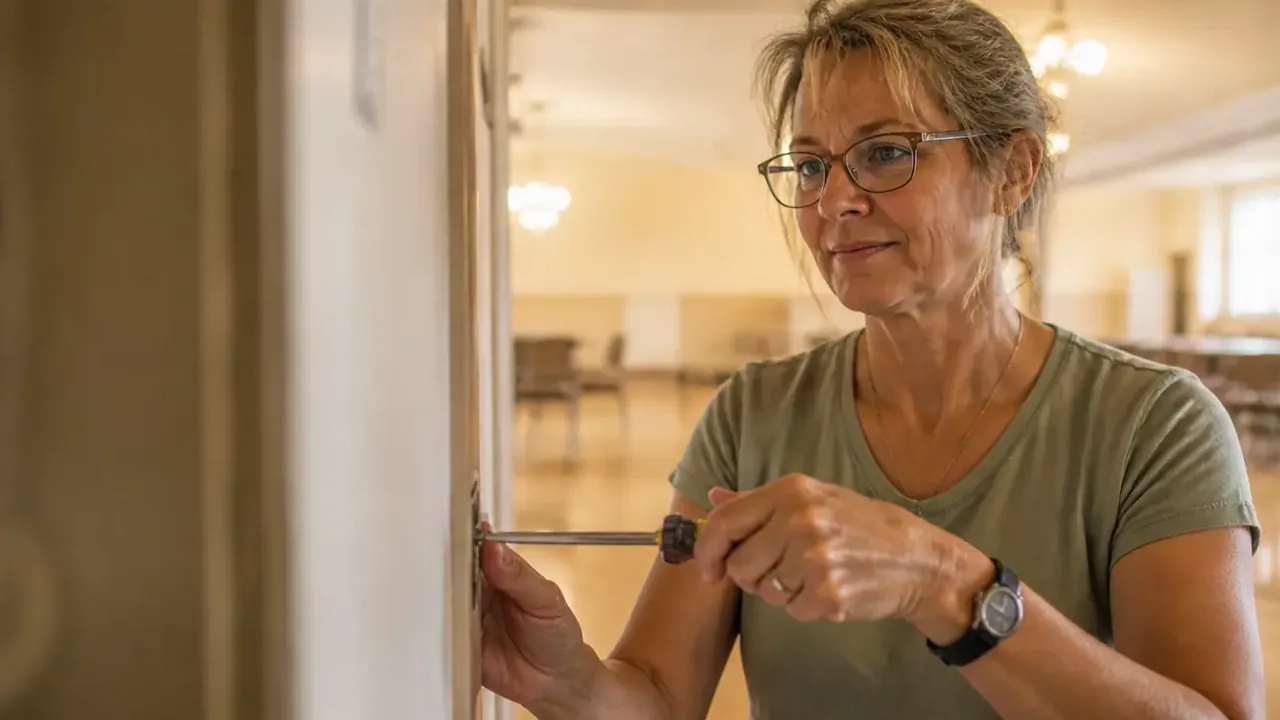
In nearly every congregation there is someone, often two or three someones, who fixes things without being asked. They arrive early, they notice the loose hinge, they carry a screwdriver on Sunday morning. The building runs on them, and they are almost never thanked publicly, because they are precisely the sort of people who do not seek it.
Thank them anyway. Name the work at the annual meeting. Put a line in the bulletin. Stewardship of a building is also stewardship of the people who care for it, and a congregation that honors its quiet fixers tends to keep raising new ones.
When the Property Chair Rotates
Finally: the handoff. Property chairs rotate, by term, by fatigue, by moving away, and every rotation is a moment when the building's memory can either transfer or evaporate. The binder is the main safeguard, but pair it with a real conversation: a walk through the building together, an introduction to the trades and contractors, a review of what is scheduled and what is worrying.
And when the roof or the boiler finally does reach the end of its life, as it will, on someone's watch, a congregation that has kept faith with maintenance approaches the fundraising conversation from a position of credibility. People give generously to boards that have visibly cared for what they already own. That, in the end, is the quiet return on all this unglamorous work: not just a sound building, but a congregation that trusts itself with the next big thing.