MF / 02.05
The Building Itself
Church Access and Closing: Give Every Building Use a Named Handover
Reconcile keys and access permissions, agree arrival arrangements, and give opening, closing and exceptions a named owner without improvising door hardware or safeguarding rules.
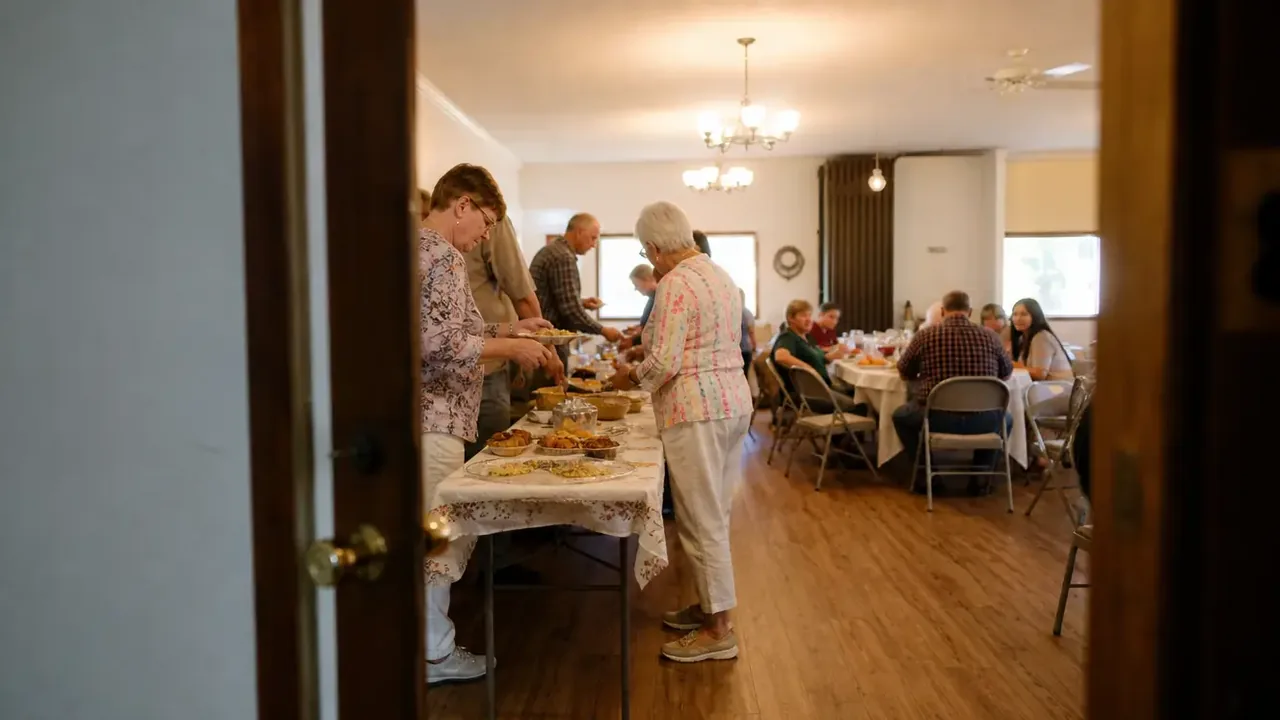
A choir arriving at a locked door and a committee leaving without knowing who checked the building have the same practical problem: the booking exists, but the handover does not. Put access beside the calendar entry. Someone should know which rooms may be used, who will let the group in, and who takes responsibility when it leaves.
The building use policy decides who may use the property and on what terms. This guide turns an approved use into an access record and a closing handover. It does not authorize a new group, prescribe a security system or promise that a checklist prevents every incident.
Reconcile the people and permissions already in circulation

Choose a person to maintain one current access register, with a deputy who can act when that person is absent. Begin with the keys, fobs and accounts already issued. Ask current staff, ministry leaders and regular outside users what they hold and which entrances or rooms it opens. Compare that information with any existing issue records. An unanswered inquiry is an unresolved entry, not evidence that the key was returned.
For each credential, record its identifier, holder, purpose, permitted areas, approving person, issue date and review or return point. Keep actual entry codes and alarm instructions in the church's approved restricted procedure, rather than attaching them to a public calendar or general meeting minutes. A register should let its authorized keeper identify an access arrangement without spreading the means of entry.
Distinguish permission from possession. Someone who can physically open the kitchen may no longer have a current reason to do so. Someone approved to rehearse in the hall may need a host to open it, rather than a permanent exterior key. Where one key opens several areas, record that actual limitation; a note saying “hall only” does not make the key stop at the office door.
Mark unknown holders, unreturned keys and shared codes for an explicit decision by the responsible church authority. A qualified access or locksmith professional can explain the available remedies and what each would change. Do not assume that a new code retires a metal key, that a returned key proves no copy exists, or that every uncertain record requires replacing every lock.
Attach an access arrangement to the approved use
For each recurring group or one-off booking, add a short access entry to the same controlled records used by the calendar keeper. It should answer:
- Which rooms, entrance and access interval are approved, including setup and departure?
- Who is the group's responsible contact, and who opens the building if a credential is not issued?
- Who closes, who is the backup, and how does the next responsible person receive the handover?
- What happens if the host is absent, the group runs late, or the next booked use overlaps?
Check the whole interval against other uses. Two activities may fit in different rooms but still compete for one entrance host, the same kitchen or a supervised children's area. Resolve that conflict before issuing access. Room permission does not confer permission to admit additional users or to extend the booking.
Use the church's adopted safeguarding policy for supervision, children's areas and adult access boundaries. A key or a familiar face does not establish safeguarding authorization. This facilities record should support that policy, not invent exceptions to it.
Make arrival work for the people you expect
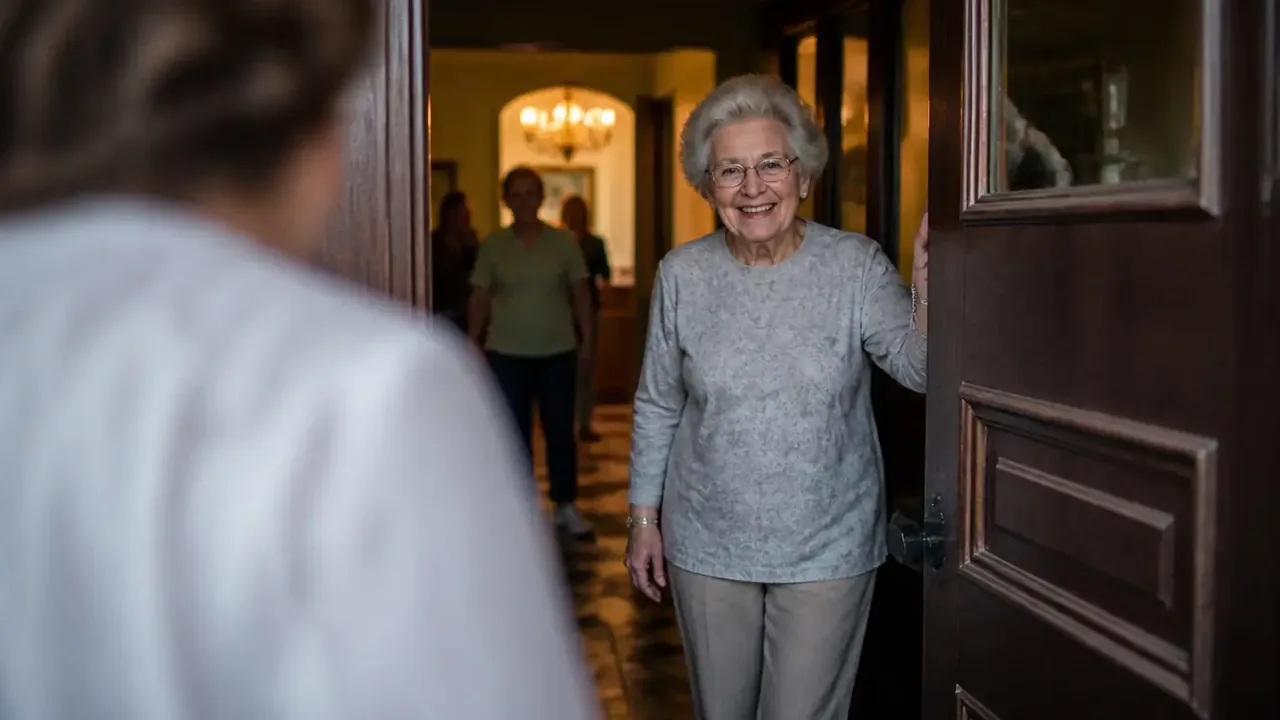
Decide how each expected group will find the approved entrance and the person who can open it. Send the meeting location, arrival window and contact method with the booking confirmation. Keep wayfinding information consistent with that arrangement. A notice sending everyone to an unstaffed side entrance defeats an otherwise sensible welcome plan.
For open visiting or prayer hours, the church's governing body should agree the rooms, hours, responsible host and response when a visitor needs help beyond the host's role. Test whether the advertised arrangement can be staffed. If it cannot, change the promise through the proper decision process rather than relying on someone happening to be nearby.
Walk the arrival route with the people who use it, including those using mobility aids or needing another form of assistance. Note a heavy door, awkward reach, confusing intercom or a host who cannot hear the visitor. The U.S. Access Board's entrance and door guide explains how routes, clearances, hardware and communication affect access. Ask a qualified adviser which requirements and remedies apply to this particular property; this guide does not determine a church's legal coverage or certify an entrance.
Review the door before changing the routine
An exterior door can restrict entry while still allowing people inside to leave. Treat those as separate functions when reviewing an access arrangement. An instruction to “lock every door” is incomplete unless the closer knows the approved occupied and unoccupied states for those doors.
The OSHA workplace exit-route standard requires employee exit-route doors to open from inside without a key, tool or special knowledge, within its coverage. That is a useful boundary to take into a property-specific review. Applicable fire, occupancy and accessibility requirements must be confirmed for the church's jurisdiction and use with the responsible authority and qualified door professional.
Have that review before changing locks, adding a keypad, altering a closer or fitting another latch. Confirm the required exit operation, rated-door behavior, emergency or power-failure operation and the approved way to admit visitors. Do not prop a fire door, defeat a closer or obstruct an exit to solve an arrival inconvenience. Give volunteers the approved operating instruction; leave hardware design and alterations to the appropriate professionals.
Close in walking order and hand over exceptions
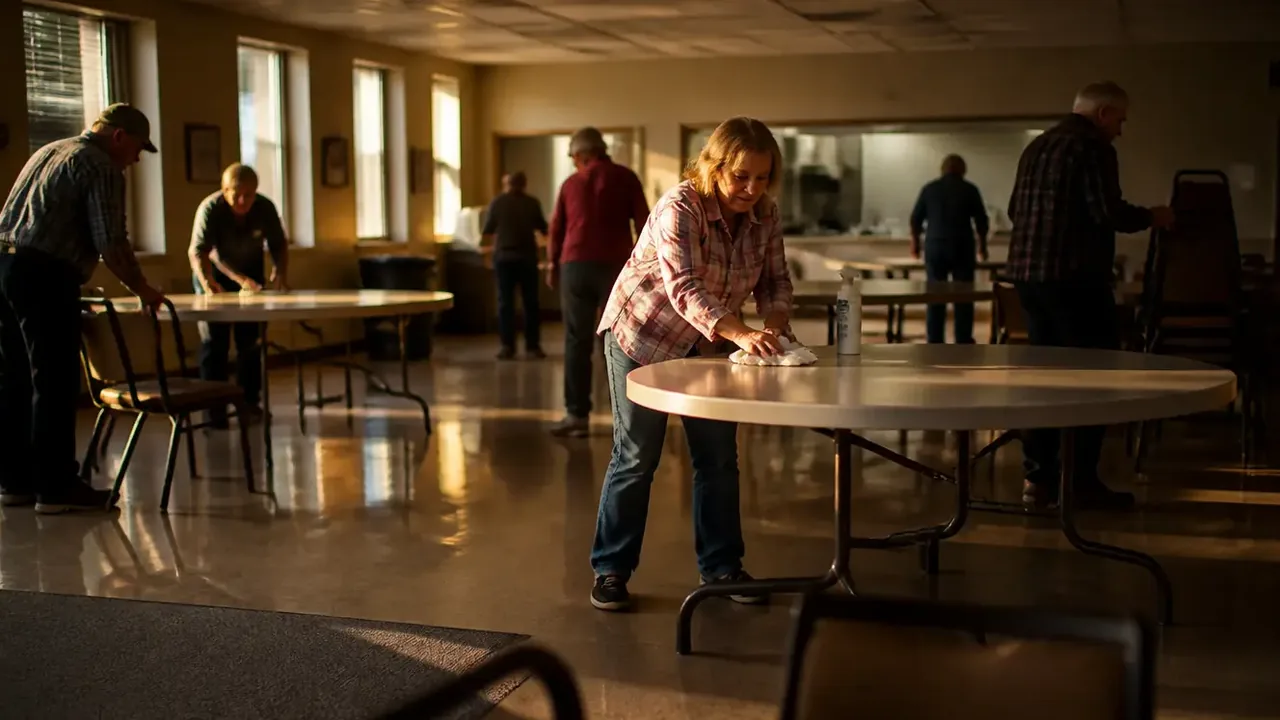
Develop a short closing route by walking the building with someone who knows its normal operation. Label the rooms and equipment in the order the closer reaches them. Separate the group's room-reset duties from the final building check so a swept floor is not mistaken for a secured building.
The route should identify the spaces to check for remaining occupants, the windows and doors to verify, and the particular equipment settings that the church has approved for the end of this use. Include appliances or temporary equipment only with their actual shutdown instructions. Avoid a blanket instruction to unplug everything or turn every system off: some equipment and lighting must remain operating, and heating setbacks need the building's approved seasonal settings.
Before securing the occupied area, confirm that the groups expected to leave have departed and that any remaining authorized use has a named responsible person. If another group is staying, transfer the closing responsibility explicitly. If someone is unexpectedly present, a door will not latch or the alarm cannot be set, follow the church's agreed contact and escalation procedure rather than recording a completed check.
Show the route to a new closer in person and let that person demonstrate it while the usual responsible person is present. Arrange the church's agreed support for someone closing late or working alone. The closer's role is to observe, use approved controls and report exceptions, not investigate an intrusion or attempt an unfamiliar repair.
Record who closed, when, and what remains unresolved. A next-day fault needs a named recipient and a temporary access arrangement if the normal one cannot be used. Keep the detail with the authorized facilities record. The public booking system needs a usable entrance and contact, not the building's alarm or key details.
Retire access when the arrangement ends
Add access return or retirement to a role change, contractor completion and the end of an outside group's agreement. Record what was returned or disabled and who verified it. For electronic permissions, have the authorized administrator confirm the result; for physical keys, distinguish an actual return from a promise to bring one next week.
Review unresolved entries and recurring arrangements at an interval the governing body chooses, and whenever an incident, missing credential or program change warrants it. Check that contacts still answer, hosts can cover the advertised hours and door instructions still match the building. The property committee's responsibilities are a useful place to assign the register and review owner.
Try the complete arrangement on one normal booking: arrival, permitted rooms, the closing walk and the exception handover. Correct the points where people had to guess. The record is ready to use when the responsible group and facilities team can complete that booking without borrowing someone else's key or assuming someone else stayed to close.