MF / 05.01
Children & Family Spaces
Walking Through Your Nursery the Way a Parent Does
A room-by-room nursery and children's space walkthrough for church boards: what parents notice first, safe-environment basics, and volunteer needs.
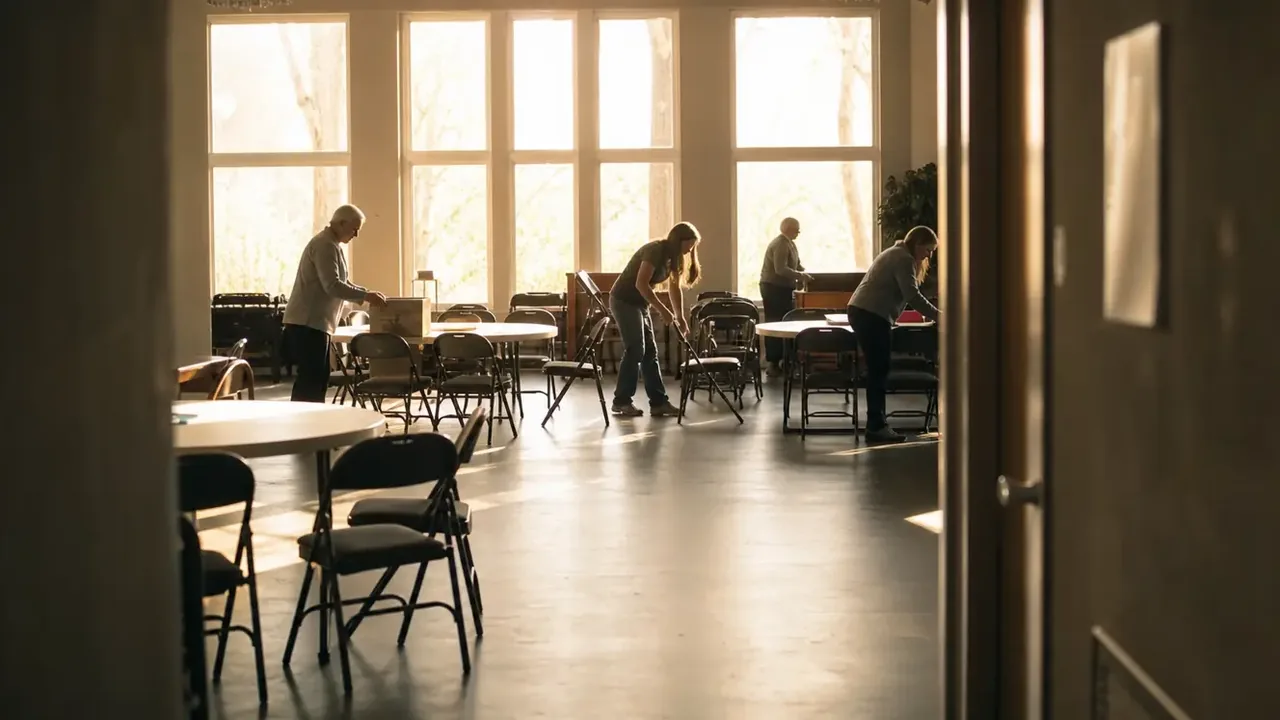
There is a moment that happens at the nursery door every Sunday in churches across the US and Canada, and most boards have never watched it happen. A visiting parent stands at the check-in table holding a baby, and in about ten seconds, before anyone has said a word about theology or programming, they have already decided a great deal about your church. They have scanned the room, the floor, the faces, the crib in the corner, the sign-in sheet. They are asking one question with their whole body: is my child safe and wanted here?
We say this without any statistics, because none are needed: any parent will tell you the nursery visit is part of how young families choose a church. And yet the nursery is often the least-inspected room in the building: cared for by a faithful handful, invisible to trustees, furnished by accumulation, and reviewed by the board only when something goes wrong.
This article is a walkthrough you can actually run: a room-by-room self-review of your nursery and children's spaces, done through the eyes of the people who judge it most closely. Put it on the property committee's calendar, bring the children's ministry coordinator and one honest parent of young kids, and take notes. It pairs naturally with a whole-building volunteer facilities audit, but it deserves its own morning, because the standards here are different: this is the one room where "good enough for church" is not good enough.
Start at the Door: Check-In and Sightlines
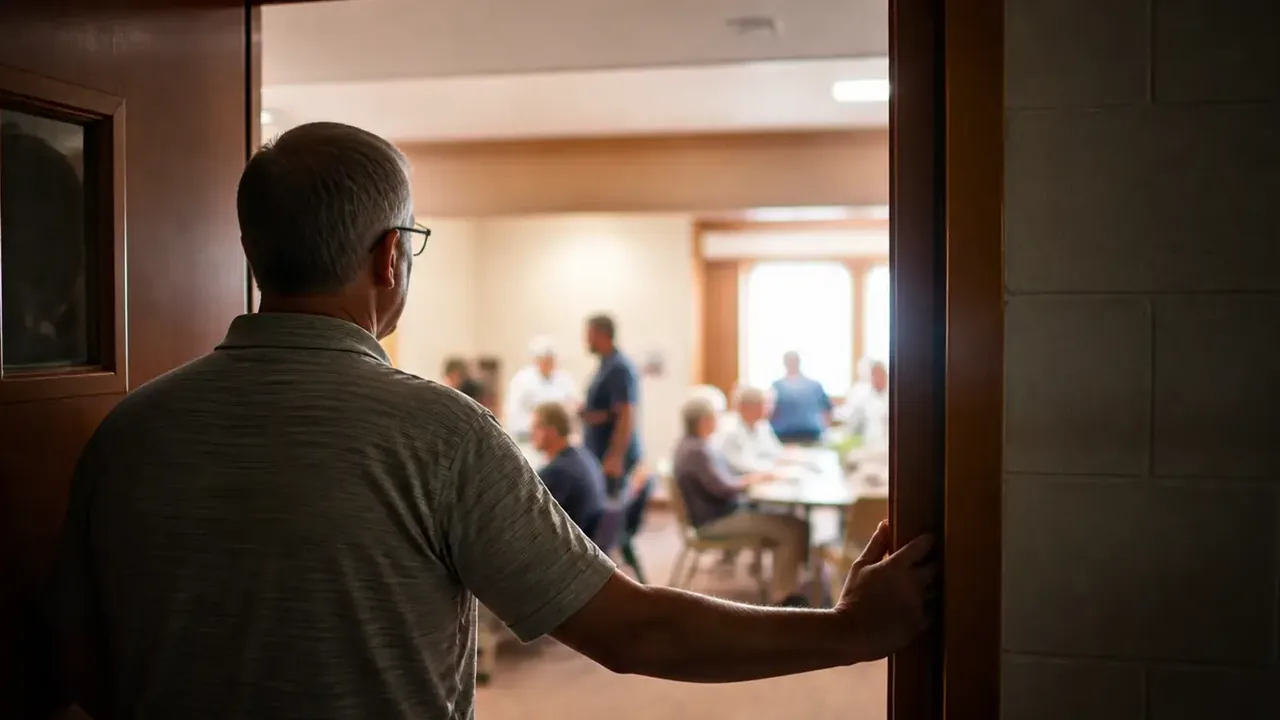
Begin where the parent begins. Stand at the nursery entrance and ask three questions.
First, is the check-in process obvious? A first-time family should be able to see, without asking, where they sign in, what information is wanted, and how they will be reunited with their child. A simple, consistent system (sign in, matching tag or token, sign out by the same adult) communicates competence instantly. If your current process is "the volunteers know most of the kids," that works right up until the Sunday a visitor arrives, which is exactly the Sunday it matters.
Second, can a parent see in? Windows into the room, a half-door, or an open sightline from the hallway lets a hesitant parent watch for a minute before committing, and lets a passing adult see the room at any time. Rooms that can be observed are rooms that earn trust: for parents and for volunteers alike, who are protected by being visible.
Third, can a stranger walk in? The door question cuts both ways: parents want to see in, and they want to know that not just anyone can wander through. Who can enter during the service, and how pickup is controlled, should be a written answer, not a custom.
The First Ten Seconds: What Parents Actually Scan
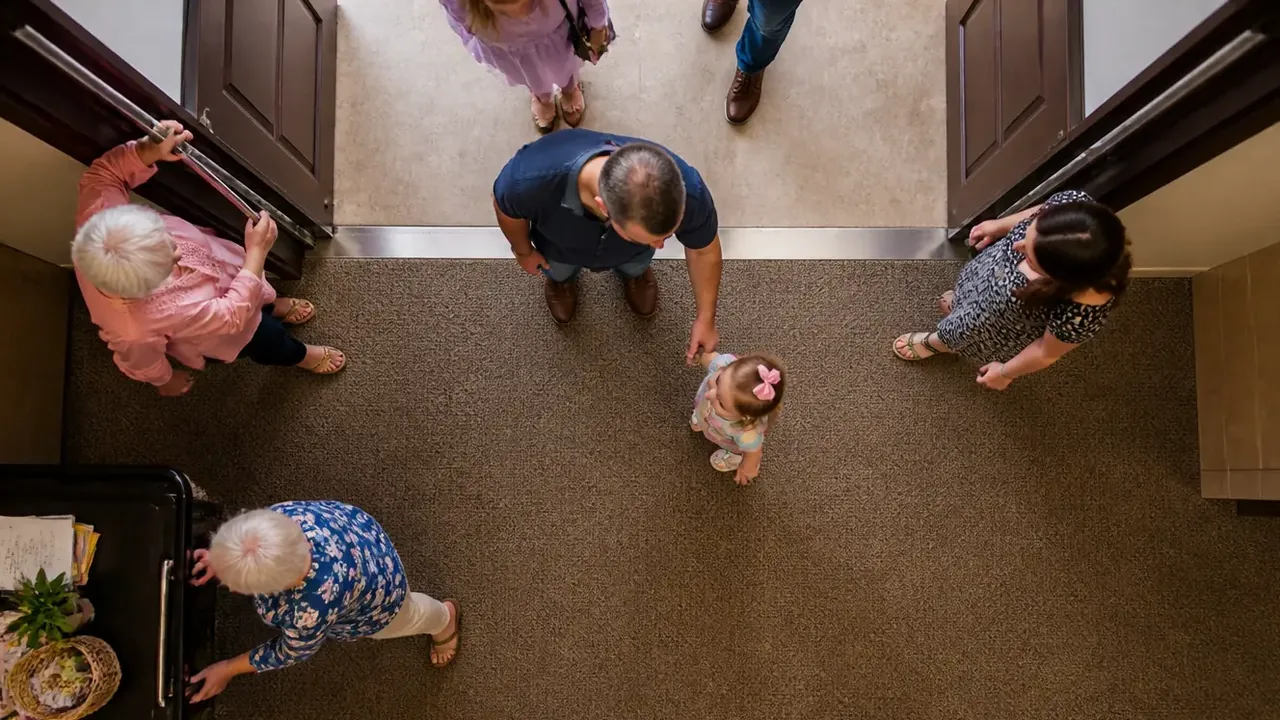
Before any policy binder is opened, a parent's eyes do a sweep, and it is remarkably consistent: the floor, the smell, the toys, the adults. Walk in and do the same sweep ruthlessly.
- The floor: clean, recently vacuumed or mopped, free of small objects a crawler could reach. Get down on your knees, literally, and look at the room from a toddler's height. You will see things you have never seen from standing.
- The smell: nothing announces a neglected nursery faster than the diaper pail, and nothing announces a loved one better than fresh air and clean surfaces.
- The toys: in good repair, cleanable, and age-appropriate. Broken toys, recalled hand-me-downs, and stuffed animals of uncertain history should leave. A smaller set of clean, sturdy toys reads far better than an overflowing bin of donations.
- The adults: unhurried, at the children's level, and clearly enough of them. Which brings us to policy.
Safe-Environment Basics: The Practices Parents Expect

Every insurer, and nearly every denomination, publishes safe-environment guidance for children's ministry, and your board should be following yours rather than improvising. But some practices are so widespread across traditions that parents now simply expect them, and their absence is noticed:
- Two adults present with children: the two-adult norm is standard practice across many traditions precisely because it protects children and volunteers at the same time. A lone volunteer in a closed room is a situation your policies should be designed to prevent.
- Screening for everyone who serves with children, with background checks handled per your insurer's requirements and your denomination's policy. This is not a statement of suspicion about beloved members; it is a floor of care that says the church takes its charge seriously. Depending on your polity, adopting this may need a board motion and a congregational explanation: make both, plainly.
- A written policy that volunteers have actually read: check-in and pickup, washroom and diapering procedures, what to do when a child is hurt or ill, and who to call.
If your congregation has none of this in writing, that is the single most important finding your walkthrough can produce, and it outranks every cosmetic item on this list.
Zones, Cribs, and the Changing Area
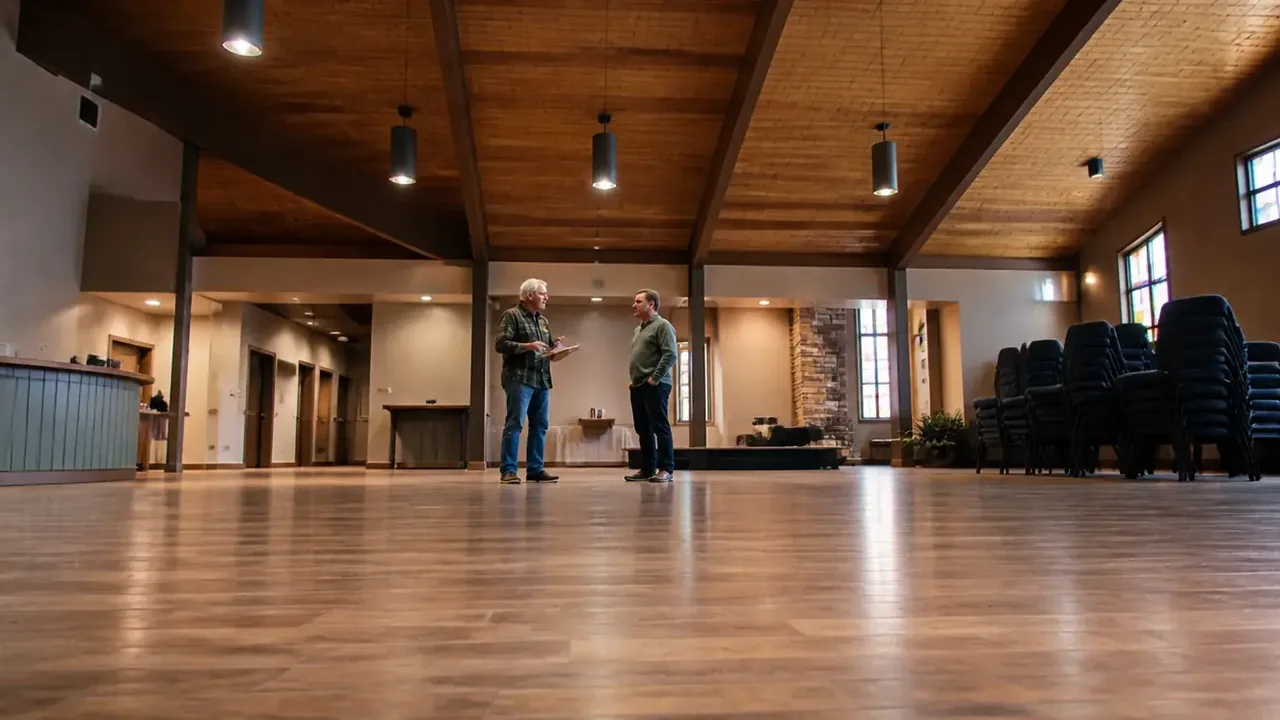
Now look at the room's geography. Infants who sleep, babies who crawl, and preschoolers who hurl themselves at furniture have different needs, and a room that mixes them without zones exhausts volunteers and worries parents. Even in one small room, a gated or furniture-defined division between the crawler zone and the big-kid zone changes everything. If your building has separate rooms by age, check that the postings on each door match what actually happens inside.
Give the crib corner and changing area particular attention, because parents certainly will. Cribs should be current-generation, correctly assembled, and bare. The guidance on safe infant sleep that parents follow at home is what they expect at church. The changing area needs a clear surface, supplies within arm's reach so no volunteer is ever tempted to step away, sanitizing between uses, and a diaper disposal that is emptied every single week without fail. Post the routine on the wall. A laminated card that says how this room is cleaned, and when, tells parents someone is paying attention.
The Quiet Hazards: Outlets, Cords, and Climbables
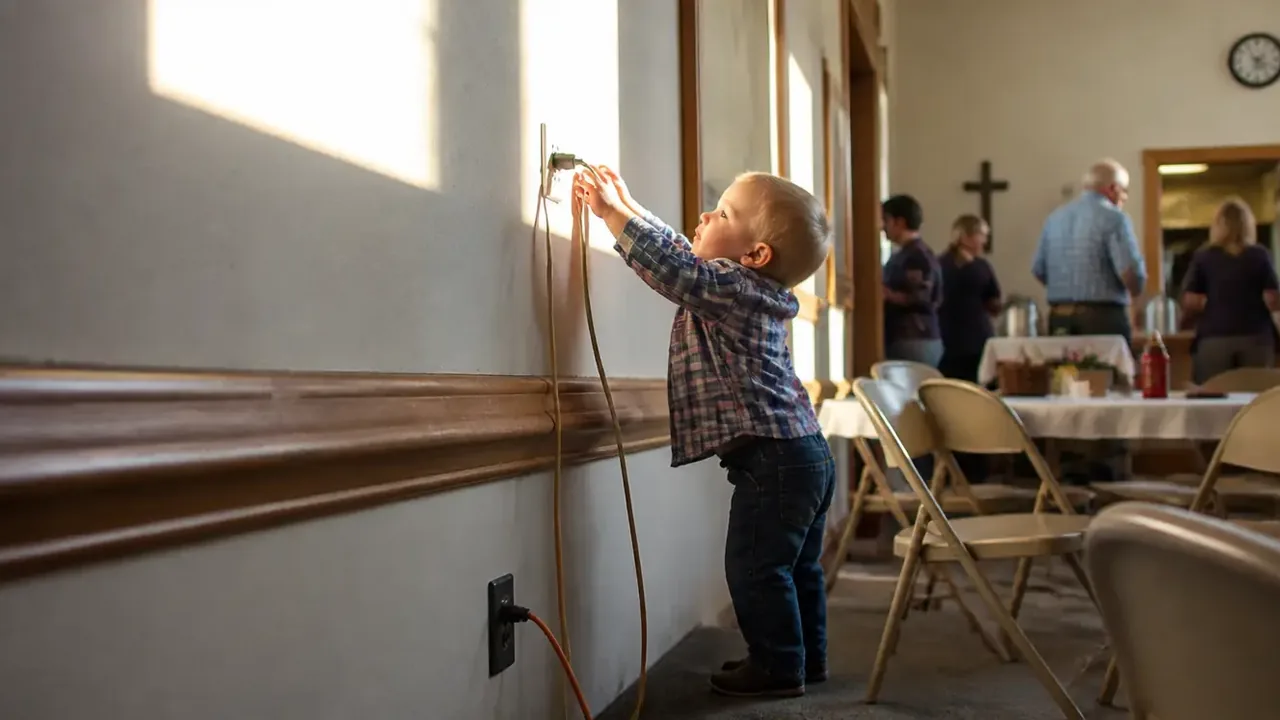
You do not need to cite a code to childproof a room. This is common sense reinforced by your insurer's guidance, and your walkthrough should cover it the way any careful grandparent would. Outlet covers on every unused receptacle at child height. Blind cords and electrical cords out of reach. Looped cords are a well-known hazard every children's safety organization warns about. Furniture that a climber could pull over, especially shelving and dressers, anchored to the wall. Door hinges that can pinch, radiators that get hot, cleaning supplies stored high and locked, and the classic church nursery hazard: the stack of folding chairs or spare equipment "temporarily" stored in the corner of the children's room. If the nursery is doubling as a storage room, that is a finding for the property chair, and our piece on multi-use spaces speaks to why every room needs a defined purpose and a reset standard.
Signage, Allergies, and the Plan You Hope Never to Use
Three quieter items complete the review. First, signage: the nursery's location should be findable from the front door by a stranger carrying a car seat, and the room itself should be labeled with ages served and pickup procedure.
Second, allergies: a visible, systematic way to record and flag allergies at check-in, and a snack policy that volunteers actually follow. Many churches simply standardize on a short list of approved snacks and post it; the point is that a parent with an allergic child should see a system, not be asked to hope.
Third, emergencies: every children's space needs a posted evacuation route, a plan for reuniting children with parents that does not depend on parents running toward the nursery against traffic, a first-aid kit that is stocked, and volunteer awareness of all three. Ask your fire marshal or local authority having jurisdiction to advise on evacuation planning. Requirements and best practices vary by jurisdiction, and they are usually glad to help a church get it right. Then rehearse it once a year with the volunteers, calmly, the way schools do.
Don't Forget the Volunteers
A nursery review that considers only children and parents misses a third constituency: the people who serve there. Walk the room again asking what it is like to volunteer in it. Is there adequate storage, so setup is minutes and not a scavenger hunt? Are supplies stocked by someone specific, or by wishful thinking? Is there an adult-sized chair for the volunteer rocking a baby through the sermon? A comfortable, well-organized room recruits its own volunteers; a chaotic one quietly burns through them. Fold the nursery's supply and repair needs into the regular property budget rather than the perpetual bake-sale economy. Our article on maintenance as stewardship makes the broader case that caring for rooms is caring for the people in them.
When the Nursery Becomes a Statement
Here is the reframe we hope your committee carries out of the walkthrough: the nursery is not a childcare utility bolted onto worship. It is one of the clearest outreach statements your congregation makes. Many traditions speak of welcoming children as welcoming the whole family, and whatever language your tradition uses, the practical truth is the same: a clean, safe, thoughtfully run children's space tells every young family that this church expected them, prepared for them, and will treat what is most precious to them with seriousness.
That message is built out of unglamorous things: outlet covers, sign-in sheets, an emptied diaper pail, two adults in the room. Which means it is a message any congregation, of any size and any budget, can afford to send. Schedule the walkthrough, write down what you find, bring the list to the board, and fix things in the order a parent would fix them. The families at your door will notice within ten seconds.